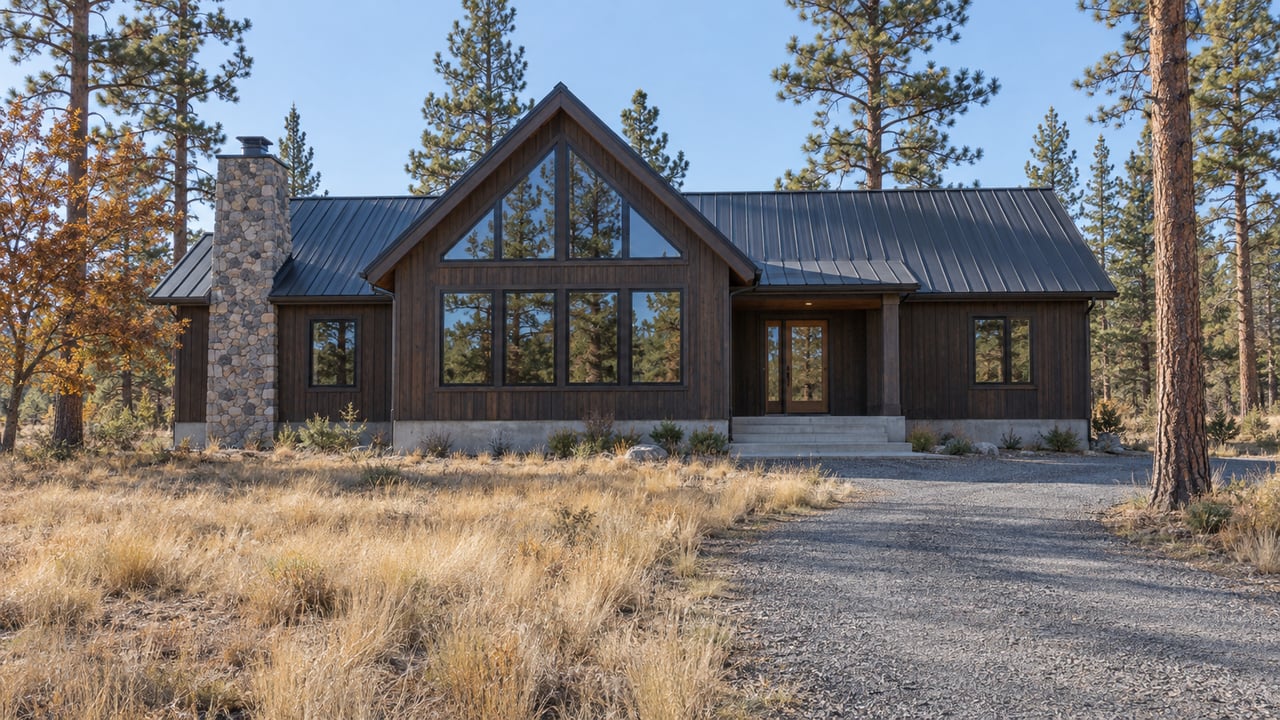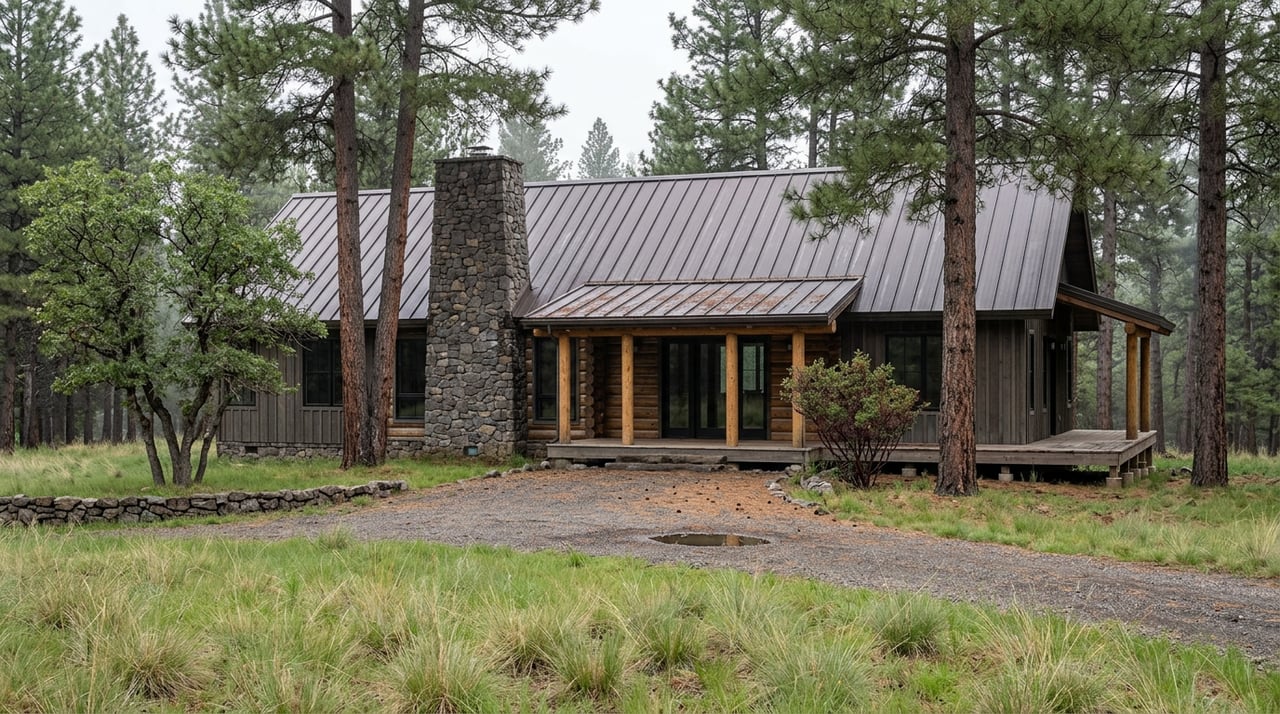
A five-acre lot outside Pinedale, backing to national forest, no HOA, ponderosa pines already standing where the driveway will go. It reads like the easiest kind of real estate decision: buy the acreage, camp on it for a season, add utilities as the budget allows. That sequence works on a platted residential lot in town. It does not work here.
Navajo County's own permitting rules invert the order most buyers expect. Before you can get electricity turned on to a vacant Pinedale parcel, you need a submitted application for a primary dwelling and a septic permit already on file. Power is not a first step. It is one of the last things the county will release, and only after you've committed, on paper, to what you're building and how you're handling wastewater. For land in Pinedale specifically, that changes what "buy now, build later" actually means.
The Order Navajo County Actually Requires
Most land buyers price a parcel by what's visible: acreage, trees, road frontage, whether the neighbors are close enough to hear a dog bark. What determines whether that parcel functions as a home site is a sequence buried in county policy, not in the listing photos.
Navajo County's planning department is explicit about it. You cannot drop electric service to a vacant lot. Power is only authorized once a valid primary dwelling application and a septic permit have both been submitted. The county also won't let you build a storage shed on vacant land ahead of the house itself. Once construction documents are filed and a building permit is open, only then can a shed follow.
Put together, that means the casual approach many buyers picture, clear the lot, run power, park a trailer, build slowly, doesn't match how the process actually works on unincorporated land in this part of Navajo County. The paperwork has to lead. The septic system has to be designed, and designing it starts with a soil test the county requires before any sewage hookup, including a septic system, gets approved.
That soil test is the perc test, and it's the piece that decides almost everything downstream.
What the Perc Test Really Decides
A percolation test measures how fast water moves through the soil on the specific spot where a leach field would go. According to Navajo County's construction permit application, if the soil drains at an acceptable rate, a conventional system, a tank and a buried leach field, becomes possible. It's the cheapest configuration available.
ADEQ's on-site wastewater application says septic sizing in Arizona runs off bedroom count and fixture load.
| Conventional system | Alternative (engineered) system | |
|---|---|---|
| Design | Septic tank plus buried leach field | Engineered system designed around the site's specific limitations |
| Relative cost | Lowest-cost option available | Depends on the engineering required |
| Who decides | Perc test result, filed with the county | Perc test result, filed with the county |
This is why land buyers who treat the perc test as a formality get the most expensive surprise in the process. A parcel that looks identical to the one next door on a listing sheet can carry a completely different build budget once the soil report comes back.
What Roughly $145,000 an Acre Buys in Pinedale Right Now
As of early September, there are roughly five dozen land parcels listed in and around Pinedale, with an average listing price near $429,590 and an average cost per acre near $145,871. Those numbers only mean something once you know what they include and what they don't.
A per-acre figure that high, in a market built on multi-acre parcels and forested lots, usually reflects smaller or already-improved tracts pulling the average up, alongside larger raw acreage that costs less per acre but more in total. What the price rarely reflects is whether the parcel has already cleared the two gates described above: a passed perc test and, if power matters to you before the house is built, a filed septic permit and dwelling application.
Some Pinedale listings do carry that groundwork already. Parcels advertised with an existing well, an installed septic system, or electricity already run to the lot line are pricing in work the county has already approved, and that's a meaningfully different purchase than raw acreage at the same or even a lower price. The acreage number on a listing sheet tells you what you're standing on. It doesn't tell you what you're allowed to do with it, or how much further you have to go before you can.
Living On Site While You Build
Buyers weighing a Pinedale parcel sometimes plan to camp or park a trailer on the land while permits move through the county, treating the RV as a bridge to the finished house. Navajo County's septic rules require the sewage system to be in place before construction begins on the permitted dwelling itself.
The practical upshot is that "I'll live on the land while I build" needs to be checked against the specific county's rules for the parcel you're considering, not assumed from what worked on a friend's land in a different county or a different state entirely.
Questions to Ask Before You Write an Offer
- Has a perc test already been completed on this specific parcel, and can you see the report, not just a seller's summary of it?
- If no test exists, will the seller allow a passing perc test as a contingency of the purchase, and who is expected to pay for it?
- Does the parcel already have a septic permit on file, or would that be step one after closing?
- If you plan to camp or park an RV on site during construction, does the specific county allow that, and for how long?
- Is electricity already run to the lot line, or would you be starting the dwelling and septic filings from zero before the county will authorize service?
None of these show up in a listing photo. All of them determine whether the acreage you're buying is ready to build on this year or a longer project than the price suggests.
A Few Direct Questions, Answered
Who usually pays for the perc test, buyer or seller? It's most often a buyer expense, though it can be negotiated as part of the offer. Either way, treat a passing result as a condition of the sale rather than something to sort out after closing.
Can I get temporary power for a construction trailer while I build? That depends on what stage your dwelling and septic filings are at. Navajo County ties electric service to those filings being submitted, not to construction activity itself, so the timeline runs through the permit office rather than the job site.
Pinedale's appeal is real: forested acreage, room between neighbors, land that still trades at prices Phoenix and Tucson buyers find hard to believe. None of that changes the fact that Navajo County's process runs on its own sequence, and the parcels that look cheapest on paper are sometimes the ones with the most paperwork still ahead of them.
If you're comparing specific Pinedale parcels and want a read on where each one sits in that sequence, before the offer, not after, Jennifer Knaust has spent more than 25 years working land and residential deals across this exact stretch of the White Mountains. You can look at what's currently available in the area through the Pinedale neighborhood page, or reach out directly to talk through a specific parcel. Let's Connect.
This article is general information, not legal, tax or financial advice. Consult a qualified professional about your situation.